
Mestalla Stadium remains one of European football’s most recognizable urban arenas, even as Valencia CF continues to wrestle with financial pressure and uncertainty over its long-delayed replacement ground. Opened in 1923, Mestalla Stadium sits close to the city centre。where its steep stands rise behind apartment blocks and busy streets. That location gives the venue an unusual presence: supporters do not simply travel to a remote sports complex;
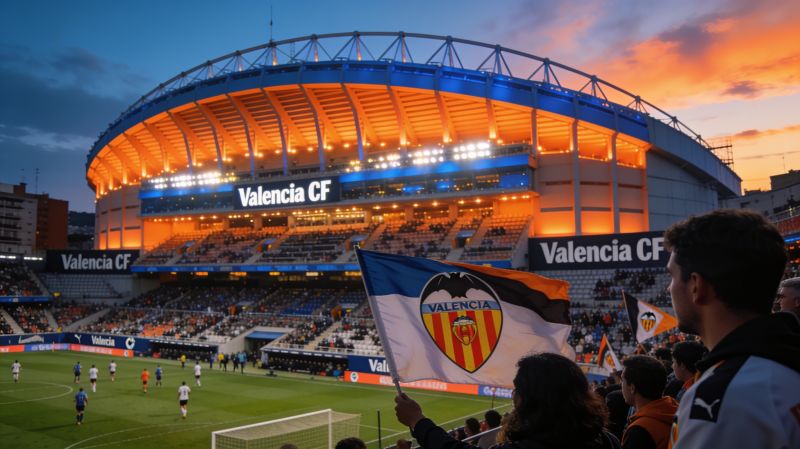
they pour into a living neighbourhood. On match days, orange shirts appear in cafés, bakeries and metro stations long before kickoff, turning the area around Mestalla Stadium into a moving pre-match procession.The stadium’s history is inseparable from Valencia’s own sporting identity. It has hosted league title celebrations, European nights, international fixtures and periods when the club’s ambitions exceeded its resources. Its concrete structure has been renovated repeatedly, but the essential character has survived. The upper tiers are famously steep, bringing spectators close to the pitch and amplifying every reaction. From the lower stands, a routine tackle can trigger a roar that rolls upward like a wave. Visitors expecting a polished。modern bowl often leave with a different impression of Mestalla Stadium: older, tighter and far more intimate than many recently built venues.That intensity was visible again during Valencia’s difficult recent campaigns. When results turned against the team。the crowd at Mestalla Stadium did not respond with quiet resignation. Whistles, chants and long stretches of pointed silence became part of the match narrative. Yet the same supporters could lift the players within seconds after a determined run or a late equaliser. The atmosphere is not always comfortable for the home side, and that is part of its power. Mestalla Stadium demands emotional engagement from everyone inside it, including visiting teams that must cope with a hostile soundscape from the opening whistle.Beyond football。
Mestalla Stadium carries architectural and cultural value for Valencia. Its position near the Jardins del Reial and university district makes it unusually accessible, while its exposed stairways and weathered facades reflect decades of heavy use. A walk around Mestalla Stadium before a match reveals details that television misses: handwritten banners fixed to railings, vendors preparing scarves, children copying the chants of older fans and police redirecting traffic as kickoff approaches. These scenes give the ground a civic role that extends beyond the ninety minutes. Mestalla Stadium is a meeting point where generations of Valencians share memories, arguments and rituals that have little to do with league tables.The future of Mestalla Stadium remains tied to the stalled Nou Mestalla project, which has been discussed for years but repeatedly delayed by financing, planning and construction problems. Every new announcement revives the same question: can Valencia CF complete a modern arena without losing the atmosphere that defines its current home?
A newer stadium could offer improved safety, hospitality areas and commercial income, but it may struggle to reproduce the compressed energy of Mestalla Stadium. For many fans, the issue is not simple nostalgia. They see Mestalla Stadium as evidence that football grounds can still belong to their neighbourhoods rather than functioning only as corporate venues. Until a credible transition takes shape, Mestalla Stadium will continue to serve as Valencia’s emotional headquarters—imperfect。ageing and remarkably alive.